


When organizing a group trip, choosing where to eat has never been simple. A restaurant that serves individual diners well is not necessarily suitable for a group of 20, 30, or 50 people. For tour groups, everything needs to meet clearer standards: a spacious setting, fast service, consistent dishes, convenient access for tour vehicles, and especially experience in serving large groups.
That is why many people today look for restaurants that specialize in serving tour groups instead of simply looking for a good restaurant. For group guests, what matters is not only eating well, but also eating on time, according to schedule, and having a complete experience for the whole group.
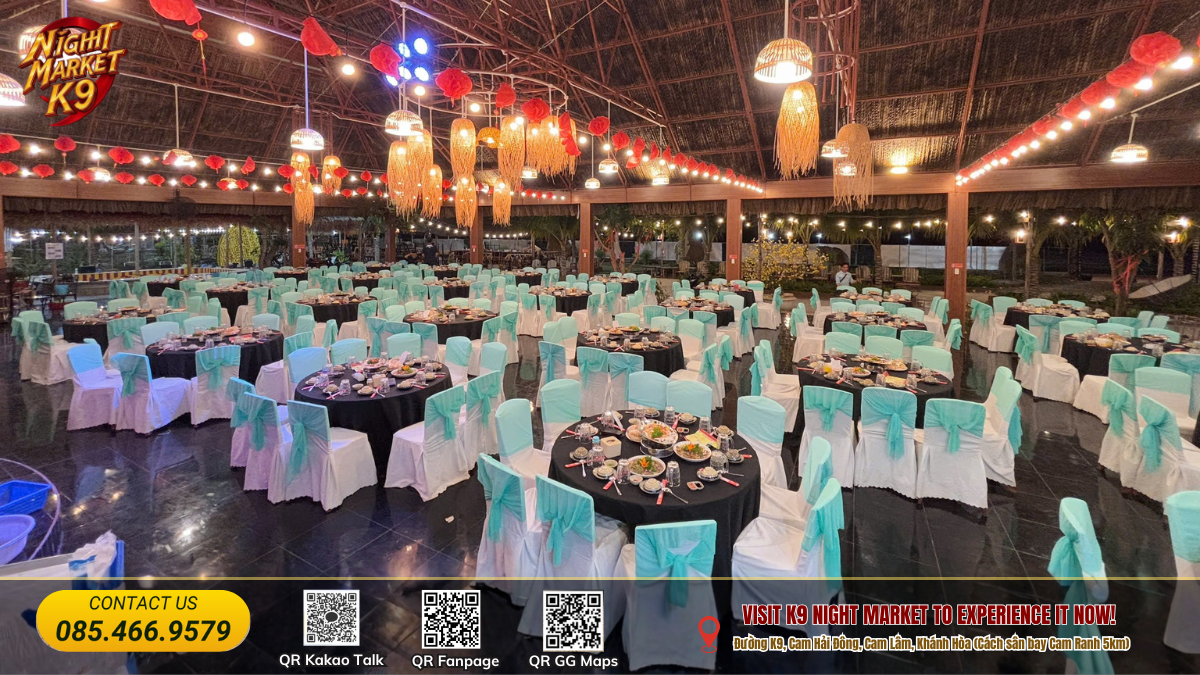
Why Is the Demand for Restaurants That Specialize in Serving Tour Groups Increasing?
Group travel is becoming increasingly common, from family tours and company tours to domestic travel groups and international inbound groups. As the number of people traveling together increases, dining needs also change significantly. Guests no longer just need a place with “enough seats,” but a stop that can serve them in an organized, fast, and stable way.
On major booking platforms, needs such as private dining, large groups, and event dining are clearly separated into their own category, showing that this is a real demand rather than a small niche market. A restaurant that specializes in serving tour groups therefore becomes a more preferred choice. Group guests usually do not judge a restaurant by a single dish, but by the entire operational experience:
- how quickly guests are received
- whether the table arrangement is neat
- whether dishes are served evenly
- whether it is easy for the tour leader to work with the restaurant
- whether large vehicles can access the place conveniently
Tour Guests Have Very Different Characteristics from Individual Diners
Individual diners can arrive at any time, order according to personal preferences, stay longer, or flexibly change their meal plans. But for tour groups, the time is usually scheduled in advance. The whole group arrives at once, eats within a fixed time frame, and then continues to the next destination. If dishes are served late or the seating arrangement is not suitable, the whole group can easily be affected, and the schedule afterward may also be delayed.
Large Groups Need Service Speed, Space, and a Dedicated Process
A group of 30 or 50 guests cannot be handled the same way as 5 or 10 guests. When the number of people increases, every step needs a clearer process, from receiving the vehicle and arranging the tables to preparing the menu, serving dishes in batches, and coordinating with the tour guide.
A restaurant that specializes in serving tour groups is often rated highly in three areas:
- spacious setting that can be divided into zones
- ability to serve dishes quickly and consistently
- a clear working process for group guests
Why Do Tour Companies Prefer Restaurants Familiar with Serving Tour Groups?
For tour companies, the most important thing is not just a good price, but stability. A place that is familiar with serving groups usually knows how to work quickly with tour guides, confirm guest numbers, prepare suitable dishes, and handle unexpected situations without disrupting the whole program. Platforms specializing in private dining and events also treat this as a separate service branch, with a process for checking availability, confirming space, and managing large-group needs that is very different from a normal table booking.
What Criteria Should a Restaurant Serving Tour Groups Meet?
If you want to choose the right place for a group meal, you should not look only at beautiful images or attractive introductions. A restaurant that truly specializes in serving tour groups needs to meet many specific operational criteria. Venue selection checklists also show that appearance alone is not enough; behind-the-scenes factors such as space, access, layout, and operating ability are what determine the actual experience.
Spacious Setting, Large Capacity
The first factor is capacity. The restaurant needs to be large enough to welcome a big group at the same time while still feeling comfortable.
For tour groups:
- seating that is too cramped makes guests feel uncomfortable
- seating that is too far apart reduces the shared experience
- a space that lacks flexibility makes it difficult for the tour guide to manage the group
Therefore, a restaurant that specializes in serving tour groups needs to prove its actual capacity rather than simply saying it is “spacious.”
Convenient Location for Tour Vehicles, Close to the Travel Route
A beautiful place is still a major drawback if a 29-seat or 45-seat vehicle has difficulty accessing it. For group guests, the restaurant should:
- be near the main travel route
- be convenient along the journey
- have easy parking
- not take too much time for turning around or picking up and dropping off guests
Set Menu or a Separate Menu for Groups
Group guests are rarely suited to the style of ordering individual dishes table by table like free travelers. Instead, a set menu or table menu usually helps control:
- cost
- time
- serving speed
- meal consistency
The menu system can be separated into categories such as event menus, kids’ menus, prix fixe menus, or separate catering menus; this shows that designing menus specifically for different needs is a professional operating approach, not a secondary detail.
Fast, Consistent, and On-Time Service
One table being served first and another table being served much later is very common if a restaurant is not used to hosting large groups. For tour groups, this is a major risk because it can make the whole group impatient, especially when the next part of the itinerary is already fixed. Group guests usually complain less about food not being luxurious enough, and more about having to wait too long or tables being served out of sync.
Suitable Restrooms, Parking, and Reception Area
Besides food and space, supporting factors such as:
- clean restrooms
- a sufficiently large parking area
- open walkways
- a convenient reception area
also directly affect the group’s experience. For large groups, especially those with children or elderly guests, these details matter even more.
What Types of Groups Are Restaurants Specializing in Tour Groups Suitable For?
A restaurant that specializes in serving tour groups is not only for traditional tours. In fact, this type of restaurant can suit many different kinds of groups. The more clearly each type of group is identified, the easier it is for the restaurant to build the right menu, setup, and service style.
Domestic Sightseeing Groups
This is the most common group. They usually travel by group vehicle, have fixed meal times, and prefer:
- easy-to-eat dishes
- reasonable prices
- a location convenient along the route
- fast service time
For this group, a table set menu is usually the most suitable choice. This is also the group that tends to respond best to meals that are “easy to enjoy, on time, and comfortable to sit through.”
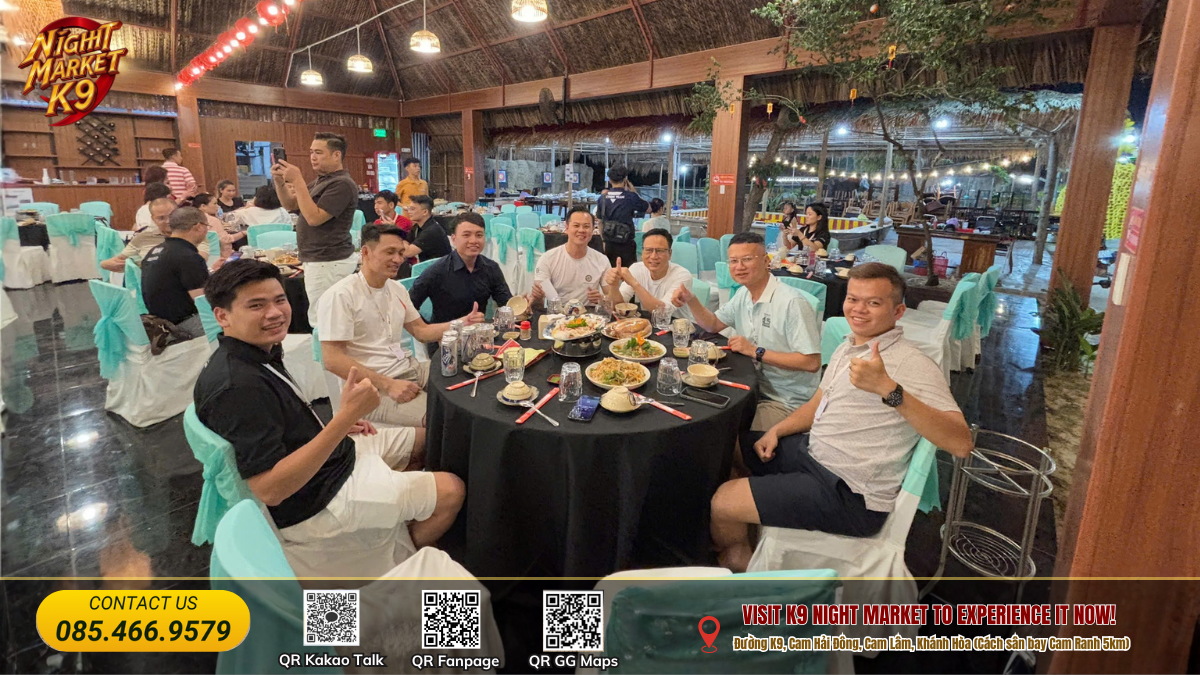
Company Groups, Team Building, and MICE
Company groups usually need a more well-organized space, and may need a place for a gathering, social activities, or dinner after a team-building program. For this group, the restaurant not only needs to be spacious, but should also have:
- a large-group seating area
- convenient parking
- stable service
- the ability to receive many guests at once
Multi-Generational Family Groups
This is the group that needs the smoothest experience. They often care about:
- dishes suitable for many age groups
- a comfortable space
- clean hygiene
- convenient movement
- a quieter setting that is easier for caring for children
A restaurant that serves multi-generational family groups well is usually also one with solid service, because it has to balance convenience, speed, and a comfortable atmosphere.
International and Inbound Travel Groups
International guests often pay more attention to:
- hygiene
- food presentation
- service speed
- service clarity
If a restaurant wants to serve this group well, it needs more standardized processes, from the kitchen to service. That is also why separating menus or service structure for each type of guest is seen as a sign of a truly professional restaurant specializing in tour groups.
Why Are Restaurants Serving Tour Groups Different from Restaurants Serving Individual Diners?
Many people think that a restaurant only needs to be good. But in reality, serving tour groups is a very different kind of operation. When serving large groups, the restaurant has to handle more layers of information and coordination than usual.
Difference in Service Speed
Individual diners can wait a little longer for dishes without too much impact. But group guests are different. If a group of 40 people is served late, the entire schedule afterward may also be delayed. This is the biggest difference between a restaurant serving tour groups and a restaurant that is only used to serving individual diners.
Difference in Menu Structure
Individual diners like choosing dishes according to personal taste. Group guests need a menu that is:
- easy to eat
- easy to share
- quick to serve
- low risk for wrong dishes
Therefore, group menus are usually designed to be more practical than menus for individual diners.
Difference in Booking Process and Guest Number Confirmation
Booking for individual diners is usually simple. But for a tour group, the restaurant needs to handle more information:
- estimated number of guests
- final confirmed number
- arrival time
- vehicle type
- special requests
- invoice
- contact person
Without this step, problems are almost certain to happen close to meal time.
Difference in Operating Requirements Within a Fixed Time Frame
Individual diners can arrive slightly early or late. Tour groups usually only have a limited window of time to eat. If the timing is off by 15–20 minutes, the entire itinerary can be affected. This is why a restaurant that specializes in serving tour groups needs to be familiar with operating according to the rhythm of “on time – correct dishes – correct quantity.”
Restaurant Models Suitable for Hosting Tour Groups
It is not only one type of restaurant that can suit tour groups. Depending on location, target customers, and operating model, many different types of restaurants can host groups effectively. The most suitable model always depends on group size, budget, and the kind of experience desired.
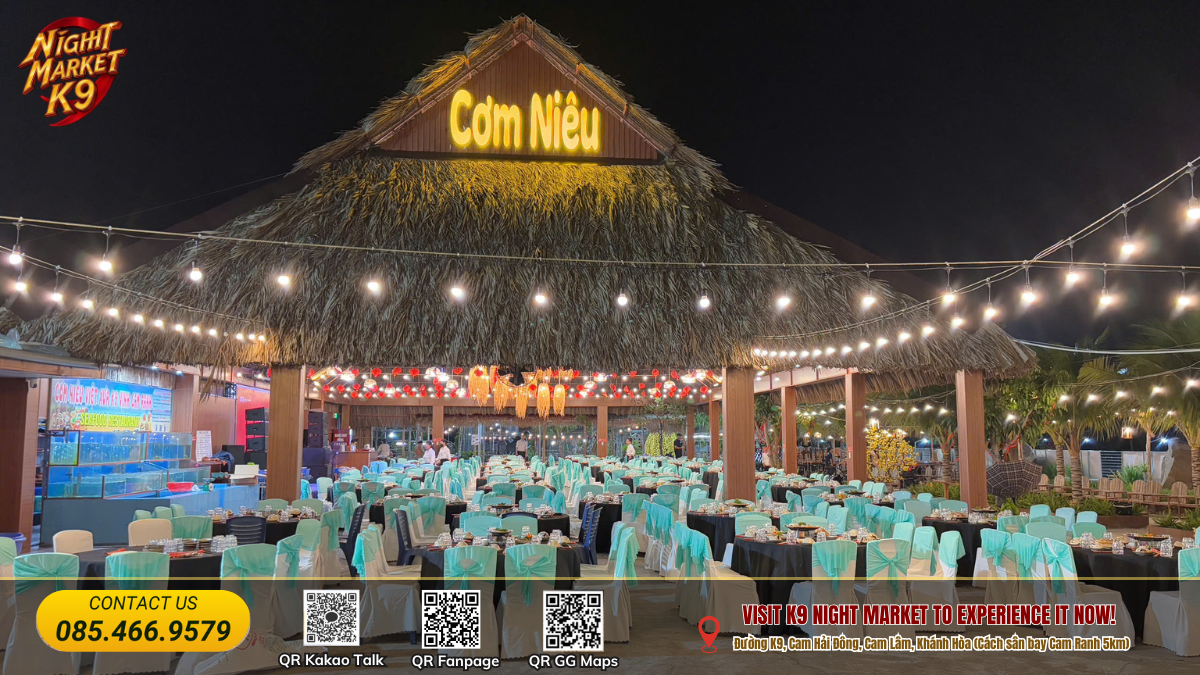
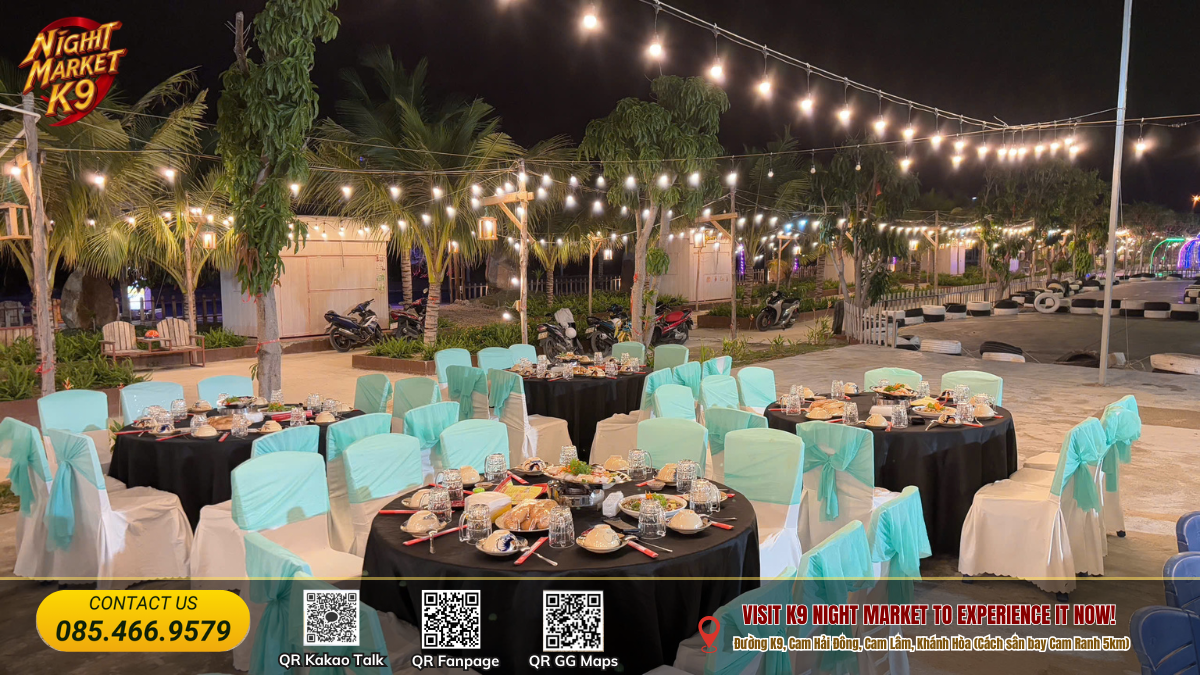
Garden Restaurants and Large-Campus Restaurants
This type of restaurant is suitable for large groups because:
- the space is open
- it is easy to divide into zones
- large vehicles can access it easily
- the seating feels more comfortable
Company groups and family groups especially like this kind of space because it feels less cramped and is easier to move around in.
Seafood Restaurants Near Tourist Attractions
In coastal tourist areas, this model fits traveler psychology very well. After sightseeing, guests often like to eat seafood or local dishes near the entertainment area, beach, or stopping point. For destinations built around the sea and resort travel, this is often the easiest model for closing group bookings.
Buffet Restaurants or Group Combo Menus
Buffets are suitable for some company groups or groups that like choosing their own dishes. However, for traditional tours, combo meals or table set menus are usually still more optimal in terms of time and cost. Buffets may look attractive, but they are not always effective for large groups if the itinerary is tightly scheduled.
Combined Dining, Rest Stop, and Entertainment Complex for Groups
This is a model with very strong potential because it solves multiple needs at the same time. If one place offers dining, a rest stop, and a space suitable for families or groups, the chance of securing tour bookings will be higher. With a model like Cam Lam K9 Night Market, the advantage lies in being able to expand the group’s experience rather than stopping at just a meal.
How Should a Menu for Group Guests Be Designed?
The menu is one of the biggest factors affecting the ability to secure group bookings. A suitable menu not only helps the meal run more smoothly, but also makes guests more satisfied. From an operational point of view, separating menus by purpose is completely necessary if you want to serve many different guest groups effectively.
Set Menu per Person or per Table?
This depends on the type of group:
- domestic groups usually suit a table set menu
- international groups or groups needing tighter budget control may suit a per-person set menu
There is no single template for all cases, but the principle is that the menu must be easy to operate and easy to quote. Domestic groups usually like the feeling that the dishes are “served to every table with a full range of flavors,” while international groups pay more attention to price level and clear portion structure.
How Many Dishes Are Reasonable?
A group menu should not be too long. A good meal needs to be:
- filling enough
- varied enough in flavor
- not overly complicated
- not too demanding on the kitchen
Fewer dishes that are served evenly and consistently are usually better than a long menu with slow service.
How to Balance Local Dishes and Familiar Dishes
A good group menu should include:
- a few dishes with local character to create an experience
- the rest should be familiar, easy-to-eat dishes suitable for most people
If the dishes are too unusual or too strongly local-specialty focused, group guests may not like them as much as a meal that is easy to enjoy, filling, and served on time.
Should Menus Be Separated for International Guests, Children, and Elderly Guests?
If possible, yes. This shows that the restaurant truly has experience serving groups and understands the needs of each guest segment. The professional menu systems currently used at Cam Lam K9 Night Market also allow menus to be separated by target group and purpose of use.
Criteria for Choosing a Restaurant That Specializes in Serving Tour Groups to Avoid Risks
When choosing a place to eat for a tour, knowing what to avoid is just as important as knowing what to choose. Most group problems do not come from bad food, but from seemingly small operational risks that happen at sensitive moments.
Avoid Small Restaurants That Have Difficulty Reorganizing Tables
Small restaurants are likely to face situations such as:
- not enough space
- messy combined table arrangements
- slow dish service
- difficulty handling extra guests at the last minute
If the group has more than 20 guests, this is the first risk to avoid.
Avoid Places Without Sufficient Parking or Where Large Vehicles Have Difficulty Entering
This is a very practical risk. If large vehicles have difficulty entering, guests have to walk far or wait a long time, and the initial experience is already affected.
Avoid Overly Complicated Menus That Result in Slow Service
The more complicated the menu, the easier it is for errors to happen. For large groups, stability matters more than presenting too many dishes.
Avoid Places That Are Not Used to Working with Tour Guides and Travel Companies
A restaurant that is not familiar with working with tour groups can easily make small but important mistakes such as:
- confirming the wrong number of guests
- arranging the tables poorly
- delayed invoicing
- lack of time coordination
For group guests, these small details are often what cause the biggest problems.
When Should You Prioritize a Restaurant with Large Capacity and a Tour Service Process?
It is not always necessary to choose a very large restaurant, but in some cases it is safer to prioritize a model that specializes in groups.
When the Group Has More Than 20–30 Guests
From this size upward, dividing tables, parking vehicles, and serving dishes are already very different from serving individual diners. This is a very clear threshold at which you should begin prioritizing a restaurant that specializes in serving tour groups rather than a normal restaurant.
When There Is a Fixed Meal Time in the Tour Schedule
The tighter the schedule, the more important it is to choose a place with experience serving tour groups. Just one delayed meal stop can cause the entire schedule afterward to pile up.
During Peak Travel Season
Peak season can easily overload restaurants that are not used to receiving group guests. At this time, places with clear processes are safer.
When Hosting Large Family Groups or Company Groups
These are two guest groups that are quite sensitive to the actual experience, so it is better to prioritize places with solid operations, a clear contact person, and fast handling of unexpected situations.
Tips for Booking a Restaurant That Specializes in Serving Tour Groups
This is a very important section if you want to avoid problems when confirming a group booking. Many issues do not happen during the meal, but because the booking was not handled carefully enough beforehand.
How Far in Advance Should You Book?
The larger the group and the higher the season, the earlier you should book. For company groups or gala events, it is best to confirm early to secure:
- seating space
- menu
- service time
Private dining platforms today also encourage guests to send requests for events and large parties in advance rather than booking close to the time like individual diners.
What Information Should You Confirm with the Restaurant?
At a minimum, you should clearly confirm:
- estimated number of guests
- final confirmed number of guests
- meal time
- menu type
- vehicle type
- special requests
- payment method
If even one of these items is missing, disputes can easily arise close to meal time.
Should You Send the Menu to Guests in Advance?
Yes. Sending the menu in advance helps reduce unexpected issues and creates a more professional impression for the whole group. This is especially necessary for:
- company groups
- multi-generational family groups
- international groups
When Should You Confirm the Guest Count Again?
There should be:
- one final confirmation close to the travel date
- one quick confirmation before meal time if the group changes
This is a small habit, but extremely valuable in tour operations.
Details That Should Be Clarified: Serving Time, Parking, Drinks, Invoice
The details that should be clarified from the start include:
- dish serving time
- parking
- how drinks are charged
- how the invoice is handled
- who the on-site contact person is
Factors That Make a Restaurant More Likely to Be Chosen Long Term by Tour Companies
If a restaurant wants to become a familiar destination for group guests, it needs to build long-term trust. Doing well with one group is not enough; what matters is making tour operators feel confident they can return next time.
Good Pricing, but It Must Be Stable
Travel companies do not like prices that change unpredictably because it makes it very hard to quote guests. The price does not have to be the cheapest, but it should be stable and transparent.
Fast, Consistent Service with Few Mistakes
This is almost a vital criterion if a restaurant wants to serve group guests well. Just a few instances of delayed dishes or mismatched tables are enough to lose trust.
A Clear Contact Person for Tour Guides and Tour Operators
People working in tours need one clearly responsible person who responds quickly and handles issues thoroughly. This is a very small detail, but it makes a big difference in the service experience.
Flexibility with Timing and Changes in Guest Numbers
Tours always have the possibility of last-minute changes. Flexibility is a major advantage. The more a restaurant understands this, the easier it is to retain group guests over time.
Knowing How to Serve Groups While Still Maintaining a Good Experience
Serving group guests does not mean serving carelessly. A good restaurant is one that still maintains food quality and a sense of care, even when the number of guests is very large. This is exactly what makes a restaurant that specializes in serving tour groups different from the rest.
Frequently Asked Questions About Restaurants That Specialize in Serving Tour Groups
How Much Capacity Should a Restaurant Serving Tour Groups Have?
There is no fixed number, but for groups larger than 20–30 guests, you should prioritize places with large capacity, good zoning, and experience in hosting groups. Capacity should be evaluated based on the setup layout and actual operating ability, not just floor area.
Should You Choose a Buffet or a Set Menu for a Tour Group?
A set menu is usually more suitable for traditional tours. A buffet is more suitable for some company groups or private events. The right format depends on the type of group.
Does a Restaurant for Tour Groups Need to Be Near Tourist Attractions?
It should ideally be conveniently located along the route to reduce travel time and avoid disrupting the schedule.
Should You Choose a Restaurant That Is Good but Does Not Specialize in Serving Groups?
It is not recommended if the group is large and the schedule is tight. A restaurant that is good for individual diners is not necessarily suitable for a tour group.
What Should Be Confirmed in Advance When Booking a Restaurant for a Tour?
You should confirm:
- number of guests
- meal time
- menu
- vehicle
- drinks
- invoice
- responsible contact person
Is a Restaurant Serving Tour Groups Different from a Regular Restaurant?
Yes. The difference lies in service speed, menu structure, booking process, and the ability to operate for large numbers of guests.
Tác giả
Đội ngũ Kiểm duyệt nội dung Chợ Đêm Cam Lâm K9
Vận hành bởi đội ngũ marketing in-house | Đồng hành chuyên môn bởi Huỳnh Quốc Cường – CEO QC MKT Solutions
Đội ngũ kiểm duyệt Nội dung Chợ Đêm Cam Lâm K9 chịu trách nhiệm biên tập, rà soát và cập nhật các thông tin trên website nhằm đảm bảo tính chính xác, rõ ràng và hữu ích cho người xem. Nội dung được xây dựng bởi đội ngũ marketing in-house, dưới sự định hướng chuyên môn của Huỳnh Quốc Cường – CEO thương hiệu QC MKT, có 03+ năm kinh nghiệm trong lĩnh vực xây dựng thương hiệu và triển khai Performance Marketing .
Chúng tôi tập trung vào các nội dung liên quan đến ẩm thực, gian hàng, trải nghiệm chợ đêm, tin tức hoạt động và thông tin cần thiết dành cho khách tham quan, tiểu thương và đối tác. Mỗi bài viết trước khi xuất bản đều được kiểm tra về tính phù hợp, khả năng cập nhật và giá trị thực tế đối với người đọc.
Bài viết liên quan
Top Restaurants Near Cam Ranh Airport with Free Shuttle Service for Travelers
Top 12+ Must Visit CheckIn Spots in Cam Ranh You Shouldn’t Miss
Top 11+ Clay Pot Rice Restaurants in Cam Ranh Worth Trying on Your Trip
How Far Is Nha Trang from Cam Ranh? Distance, Travel Time, and the Best Ways to Get There
Restaurants in Cam Ranh with a Kids’ Play Area